Motivation vs Capacity: Why Wanting Something Isn’t Enough to Achieve It

We don’t talk about this enough, so let’s say it plainly:
Wanting something deeply does not mean you currently have the capacity to pursue it sustainably.
And that doesn’t make you lazy, undisciplined, or “bad at follow-through.”
It makes you human.
At Hour Day, we believe mindful productivity starts with honesty—not hype. This post is for the person who wants more for their life, but keeps feeling stuck, burned out, or disappointed in themselves for not “doing enough.”
Let’s break down what’s really happening.
Why Understanding Capacity Changes Everything
Most goal-setting advice focuses on motivation:
Want it badly enough.
Push harder.
Stay consistent.
But motivation alone doesn’t account for:
Mental fatigue
Emotional stress
Physical energy
Family obligations
Work demands
Nervous system overload
When we ignore these realities, we end up planning for a fantasy version of ourselves instead of the one actually showing up each day.
And that’s where burnout begins.
Motivation vs Capacity: What’s the Difference?
Motivation = Desire
Motivation is the want.
The vision.
The excitement.
The future you keep imagining.
It answers the question:
“What do I want?”
Motivation is powerful—but it’s not fuel.
Capacity = Available Energy
Capacity is what you can realistically give right now without harming your health, peace, or relationships.
It includes:
Physical energy
Mental clarity
Emotional bandwidth
Time
Nervous system regulation
Capacity answers the question:
“What can I support consistently?”
This is the part most planning systems ignore.
The Problem Isn’t Lack of Discipline—It’s Overestimating Capacity
When motivation is high, we often:
Overcommit
Create packed schedules
Set unrealistic timelines
Stack habits too quickly
Then life happens.
Energy dips.
Stress rises.
Consistency breaks.
And instead of adjusting the plan, we blame ourselves.
Why Planning Within Capacity Creates Momentum
Here’s the truth most productivity culture won’t tell you:
Sustainable momentum comes from honoring your lowest-energy days—not just your best ones.
When you plan within capacity:
You follow through more often
Your nervous system feels safer
Progress becomes repeatable
Motivation stops crashing after week two
Small, supported actions compound faster than big plans you can’t maintain.
How to Plan Within Your Real Capacity (Not Your Ideal One)
Step 1: Separate Desire From Readiness
You can want something and not be ready to pursue it at full speed.
Ask yourself:
What do I deeply want long-term?
What do I have energy for this month?
What feels supportive instead of draining?
This removes shame and replaces it with clarity.
Step 2 : Identify Your “Bare Minimum” Days
Instead of planning for perfect weeks, plan for your hardest ones.
Ask:
What can I do even on low-energy days?
What keeps me connected to my goal without pressure?
Momentum is built on continuity, not intensity.
Step 3: Build Gentle, Repeatable Systems
Capacity-based planning focuses on:
Fewer priorities
Flexible timelines
Rest built into the plan
Progress that adapts to your energy
This is why we design Hour Day tools to work with your life — not against it.
This Is Why So Many People Feel “Stuck”
It’s not because you don’t want it enough.
It’s because:
You’re planning for who you wish you were
Instead of who you are right now
In the season you’re actually living in
When you honor capacity, motivation stops feeling like pressure—and starts feeling like direction.
You don’t need more discipline.
You don’t need harsher routines.
You don’t need to “try harder.”
You need a plan that respects:
Your energy
Your nervous system
Your real life
Progress doesn’t come from pushing past yourself—it comes from working with yourself.
And that’s where gentle momentum begins.
If this post resonated, you’ll love how we approach planning and consistency at Hour Day.
Explore our Mindful Morning Journal — designed to help you align goals with energy, clarity, and capacity (not pressure).
Or bookmark this post and return to it the next time you feel frustrated with yourself.
Your pace is not a problem.
Your capacity is information.
And honoring it is a form of self-respect.
—
Our day. Our way.
Your guided morning routine
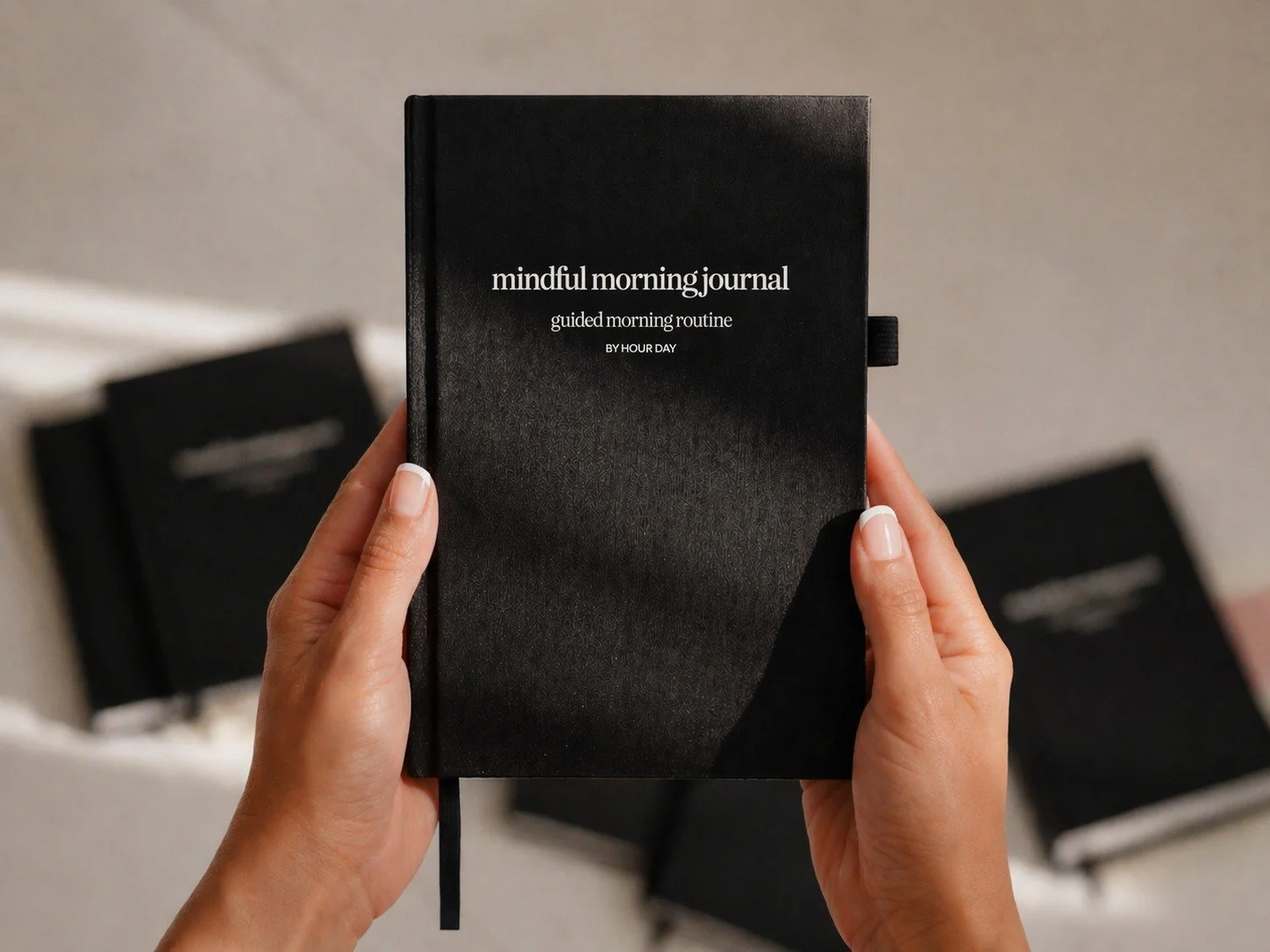
Your 10-Minute Morning Ritual to Feel Grounded, Clear & Intentional Every Day
Black linen hardcover | Includes pen loop and bookmark | 6x9 inches | 200 Guided Pages | Premium gift box case
What is the Mindful Morning Journal?
The Mindful Morning Journal is a science-backed guided journal designed to help you start each day with clarity, calm, and confidence. In just 10 minutes, this gentle morning practice aligns your mindset, body, and energy so you can move through the day with intention.
Whether you're a busy professional, overwhelmed entrepreneur, or simply someone craving more peace and purpose in your mornings, this journal is your daily anchor.
What You'll Get When You Purchase:
A 6x9" linen hardcover journal that’s easy to keep on your nightstand or toss in your bag.
Packaged in a premium gift box case for a luxurious unboxing experience.
A gentle 6-step morning routine:
Gratitude Practice
Breathing Exercise
Daily Intentions
Stretching & Movement
Visualization Exercise
Affirmation of Self-Love
A minimalist, clean layout that keeps you focused and grounded.
Each journal also includes a scannable QR code that unlocks your private Mindful Morning Community Page, filled with guided resources, mindful tools, and extra support to help you stay inspired every single day.
Heads up! This journal is a physical product. Something you can hold, flip through, and cozy up with. We’ll grab your shipping address at checkout to make sure it lands on your doorstep safe and sound.